


The Chalk Line – one of the 2022 Halloween Season additions to Netflix’ library – is surprisingly a very refreshing film. Mixing terror and some psychological suspense in a very unexplored way for today’s standards, it truly keeps the viewer on the edge. Now if you really want to explore what was behind all the crimes that are knitted in this movie, don’t worry, we we’ll explain this movie and its ending in really good detail starting right now.
Paula (Elena Anaya) injects herself with a hormonal treatment to be able to get pregnant. Paula does not want Simón (Pablo Molinero) to know that she is following this treatment, because for years they both underwent strong rounds of treatment to be able to conceive a child together, however, the stress and anxiety for the treatment to work caused strong conflicts in the couple, who finally decided to take a break before deciding whether or not they would try again.
Paula did not want to wait for the deadline to decide, and she took the risk of continuing with the treatment on her own, hiding from Simón, so as not to generate an additional conflict for not meeting the deadline.
The plot of the film begins when Paula and her husband Simón find Clara (Eva Tennear). Clara is the daughter of Ingrid Morand and Eduardo Olivares (Carlos Santos), the neighbor and friend of Paula and Simón. And no, Eduardo did not kidnap Clara. Eduardo kidnapped Clara’s mother, Ingrid.
Ingrid Morand was a teenager who spent vacations with her parents Klara and Christian Morand in Spain, in June 2011. There, in an oversight of her parents, she was kidnapped by Eduardo Olivares, who transported her to the outskirts of Madrid, where he not only kept her captive , but subjected her to cruel torture, sexual abuse, hunger and thirst. What Eduardo did not count on was that Ingrid was going to get pregnant, Eduardo allowed Ingrid to have her daughter, and to accompany her, not out of pity for her, but as one more way to control her.
However, shortly before the events with which the film begins, Ingrid dies in Eduardo’s basement, as a result of the terrible mistreatment to which he subjected her, and to a failure of her organs, specifically her kidneys. Clara remained alone in the basement.
Eduardo left Ingrid’s body in Bayonne, in France, so he had to have crossed the border with the body. Probably to prevent the local police from intervening, and to keep himself safe.
With Ingrid, we already know that Eduardo subjected her to cruel treatment, including torture and sexual abuse. As for Clara, it is evident that she had a different approach. Basically, with Clara, he maintained a strict relationship of control, which when it failed, triggered strong physical punishment. According to the medical opinion, Clara indeed has serious physical problems, but she was not sexually abused.
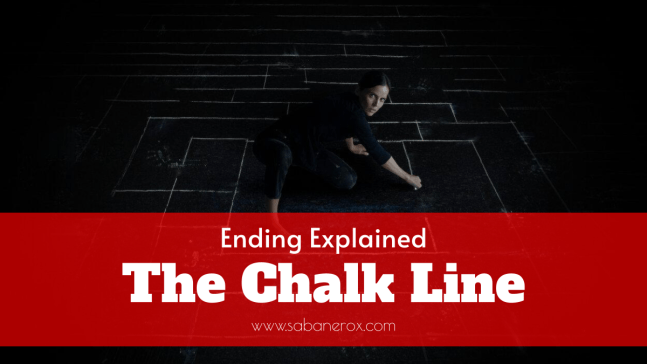
Burrhus Frederick Skinner carried out experiments that proved that humans can also be operantly conditioned, in the same way that dogs sit or stand if they are given a kibble, and hear a whistle, or a code word. Eduardo surely did experiments to reach those results with Clara. The conditioning was simple, if she stayed inside the chalk she received rewards, if she got out,she suffered monstrous punishments.
Now, Eduardo knew very well how to get her out from the chalk without driving her mad, he would simply cover her eyes, thus mantaining the conditioning and taking her out without any problems. Paula herself did something similar when he took her to her house, using a blanket so she wouldn’t see.
As happened with her mother, the subjection to cruel treatment (blows, burns, and mechanical suffocation) takes the body to a critical limit that triggers a drop in blood pressure, which eventually triggers organ failure, where kidneys are the first to fail.
In Clara’s case, being so young and being exposed to Eduardo’s torture for so long, her body began to develop those problems. However, apparently, Clara’s problems were not irreversible, because shortly after she stayed with Paula and Simón, she began to improve remarkably.
Eduardo left Clara on the highway because Clara was showing the same signs of kidney failure that took the life of her mother, Ingrid. Eduardo, knowing how much control he had over Clara, considered it convenient for the girl to receive medical help, without him being suspicious, so he organized everything about so someone would find her on the road. Surely Eduardo knew that Paula and Simón were crossing that point at that time and he tried to get someone he knew to find her to keep informed of her and eventually get the girl back. For her peace of mind, not only did she obtain information about Clara’s whereabouts, but Paula and Simón took her to live with him.
Maité betrayed Eduardo because basically it was the only way to get rid of his control and mistreatment, but even more so to protect her own children from their father’s cruelty. Now, the reason why Maite simply did not allow Eduardo to stay in the basement until the police arrived is that there had to be sufficient proof, through Eduardo, that he committed the crimes, and that the prosecution would be overwhelming.
At the end of the film we see that after Clara and Paula were rescued, Clara was taken with her grandmother Klara to Hamburg, Germany, where she was finally able to lead a normal life, physically healed and now clearly far from the trauma of her birth, and especially the chalk. Paula, despite having received a horrible wound to her collarbone, did not have fatal consequences to the point that she was finally able to get pregnant and start a new life in Madrid together with Simón.
Questions? Annotations? More doubts? The comments section is open just below so feel free write. See you in the next installment of Ending Explained here at El Sabanero X.

¿Terminaste de ver la segunda entrega de Enola Holmes, y te has quedado con dudas, interrogantes o inquietudes en medio de las conspiraciones, asesinatos y pistas? No te preocupes, porque a continuación y sin tanto preámbulo damos inicio al Análisis y Explicación de… Enola Holmes 2.
Tal como se mostró en los documentos que Enola (Millie Bobby Brown) encontró en la caja fuerte de la fábrica, la fábrica de fósforos Lyon estaba en la quiebra, justo antes de que Henry Lyon y Lord Charles McIntyre, hicieran un trato fraudulento. Esencialmente Fósforos Lyon arrojaba pérdidas por utilizar fósforo rojo, más costoso, en su producción, por lo que McIntyre le propuso hacer una sociedad en la que se salvaba a la fábrica, siempre que se cambiara la materia prima de fósforo rojo a fósforo blanco.
Al ser el fósforo blanco más económico, podía producir mucho más, a un menor costo, produciendo enormes ganancias para ambos. Con lo que no contaban ni McIntyre, ni Lyon, es que tenían dos grandes antagonistas, el trio de Mae (Abbie Hern), Sarah (Hannah Dodd)y el propio William Lyon (Gabriel Tierney), y por otro lado, nada más y nada menos que el mismísimo Moriarty. Y para su peor suerte, luego los hermanos Holmes: Sherlock (Henry Cavill) y Enola.
Primero empecemos por lo más relevante aquí ¿cómo se formó el trio de Mae, Sarah y William Lyon? Mae y Sarah, además de trabajar en Fósforos Lyon, tenían un segundo trabajo en el Teatro Paragon, donde actuaban en diferentes obras, especialmente musicales. Allí William quedó prendado de Sarah, quien muy probablemente buscaba información y sobre todo pruebas, sobre lo que hacían en la fábrica.
Pero pronto, Sarah entendió que William no sólo sabía del asunto sino que estaba completamente en desacuerdo, pero al igual que ella, no tenía pruebas suficientes. Lo único que pudieron hacer fue comprobar empíricamente, haciendo experimentos en casa, que el fósforo blanco era tóxico, al punto de matar plantas y animales que se acercasen a él. Mientras que el fósforo rojo era virtualmente inofensivo.
El plan de Mae, Sarah y William era conseguir las pruebas. William entró a la oficina de Lord McIntyre y consiguió el contrato firmado por ambos para cambiar la materia prima y Sarah logró entrar a la oficina y robar la prueba de su segundo crimen: ocultar que el fósforo blanco causaba enfermedades a las trabajadoras, y las asociaba con Tifus. Lo que hacían era crear una narrativa en la que convencían a todo Londres de que había una epidemia de Tifus, cuando lo que en realidad ocurría era el envenenamiento generalizado de la gente que trabajaba con el fósforo blanco.
Moriarty es el seudónimo que usaba Mia Troy (Sharon Duncan-Brewster), la secretaría de Lord Charles McEntyre, y su plan era básicamente sobreponerse a las enormes limitaciones que le imponía la sociedad victoriana de Londres, obteneindo cantidades enormes de dinero extorsionando a su propio jefe, y a Henry Lion. De esa manera podría ser alguien, en un mundo donde valoraran su inteligencia y no una simple secretaria gris de un lord inglés.
Cuando fue evidente que alguien más, además de ella, sabía el secreto del fósforo blanco, Moriarty vio que su plan de extorsión estaba en peligro, así que decidió tomar serias cartas en el asunto.
Sherlock Holmes (Henry Cavill) estaba investigando un caso de extrañísimos movimientos de dinero, donde se hacían retiros y consignaciones en una serie de bancos, en cantidades importantes, sin conexión con nombres. El dinero era, en realidad, el producto de las extorsiones de Moriarty a Lion y McEntyre, que ella utilizaba para confundir a Sherlock Holmes, con quién tenía una especie de fascinación, a un nivel intelectual.
Cuando Enola empezó a investigar la relación entre Lion y McEntyre, se econtró con que Sherlock estaba siguiendo el mismo caso.
Grail (David Thewlis) era pagado por Moriarty, aunque no tenía ni idea de que esa era su verdadera identidad. Muy seguramente Grail creía que su empleador era el mismo Henry Lion o Lord McEntyre. Aunque al final de cuentas su oficina de policía estaba al servicio de quién pudiera pagarle. Y Moriarty tenía el sistema de bancos para mover su dinero sin sospechas.
Mae, quien se encontraba oculta con Sarah fue emboscada por Grail, bajo ordenes de Moriarty. Ambos querían únicamente sacarle la información de dónde estaban los documentos, sin embargo en la confrontación Mae murió. William era el único que sabía dónde estaban los documentos y lo ocultó en el mapa que asemejaba una partirura, para de esa forma buscar la manera de exponerlos junto con Sarah.
Sin embargo, cuando Moriarty engañó a Enola para extraer información de William, entendió que él trabajaba con Sarah, y ordenó a Grail torturarlo para revelar el sitio donde se encontraban las pruebas. William murió en el interrogatorio, pero no reveló el sitio.
Mientras Lion y McEntyre se enteraron que Sarah había robado los documentos de la oficina de la fábrica, creyeron de inmediato que ella era la extorsionista y pusieron todo su empeño encontrarla. Y Sarah y William también lo creyeron, al punto que decidieron entonces ocultarla bajo el nombre de Cicely, una más de las damas londinenses que aparecían en los bailes. Así, oculta a plena vista, pudo mantenerla a salvo.
La idea era que Sarah, como Cicely, se acercara a Tewkesbury, el novio de Enola, para que este recibiera los documentos y pudiera exponer el fraude.
Al final vemos que finalmente se enfrentan las tres facciones en el juego: Enola, ahora de parte de Sarah; Moriarty, y Lord McEntyre. Lo primero que hicieron fue descubrir a Moriarty, y en efecto Mia Troy, admitió ser quien extorsionaba a la Fábrica Lion, y había enviado a Grail a asesinar a Sarah Chapman, a Mae y a William Lion.
Sin embargo, una vez con los documentos de prueba en la mano, McEntyre los quemó para quedar impune. Sin embargo, en alusión a un hecho histórico, no fueron unos documentos, sino la lucha civil de la propia Sarah Chapman, así como la presión de Lord Tewkesbury, los que lograron poner fin a la conspiración de los fósforos blancos.
Mientras que Enola y Sherlock decidieron continuar con sus carreras por separado, aunque Enola recibió el consejo de su madre Eudoria, de buscar alguien que la engrandeciera aún más.
Bueno, Sarah Chapman en efecto sí existió en realidad, y de hecho fue una activista por el derecho de los trabajadores (hombres y mujeres) en el Londres de finales del Siglo XIX, e inicios del Siglo XX, pero la Sarah Chapman de la película es en definitiva un personaje ficticio. En primer lugar Sarah Chapman no era una empacadora, sino una maquinista, y no era de una extracción totalmente humilde. De hecho fue su educación y su extracción la que le permitió ser lider del proceso. Poco después Sarah se casó con un miembro del gabinete británico, y su relación con el dueño de la fábrica de fósforos para la que alguna vez trabajó, – o con su hijo – ciertamente nunca tuvo tintes románticos.
Podríamos decir que Enola Holmes es una obra ficticia, ligeramente inspirada en hechos históricos de los que en efecto se toman algunos nombres.
¿Preguntas? ¿Anotaciones? ¿Dudas? La sección de comentarios está abierta justo debajo de esta publicación para que la puedan utilizar a su gusto. No siendo más nos vemos en la próxima entrega de Preguntas y Respuestas en El Sabanero X.
No olvides seguirme en mis redes sociales como SabaneroX

 El Sabanero X